Digital Classics
Developing digital methods for the analysis of ancient literary texts, including translation alignment, close and distant reading, and the study of textual variation and transmission.
Our Digital Humanities research explores how computational and digital methods reshape the study of the ancient world. At Durham, these approaches form a key strand of the Faculty of Arts and Humanities’ Transformative Humanities research agenda, and connect with broader interdisciplinary initiatives across the University and beyond.
Across these strands, our research generates tools, visualisations, datasets, and analytical frameworks that open new pathways in Classics and Ancient History. Many of these contribute to open-source platforms and collaborative infrastructures.
Developing digital methods for the analysis of ancient literary texts, including translation alignment, close and distant reading, and the study of textual variation and transmission.
Developing machine learning models to support the interpretation of inscriptions, with an emphasis on human–AI collaboration and methodological transparency.
Using quantitative analysis and network modelling of archaeological datasets to investigate historical processes, economies, and social structures in the ancient world.
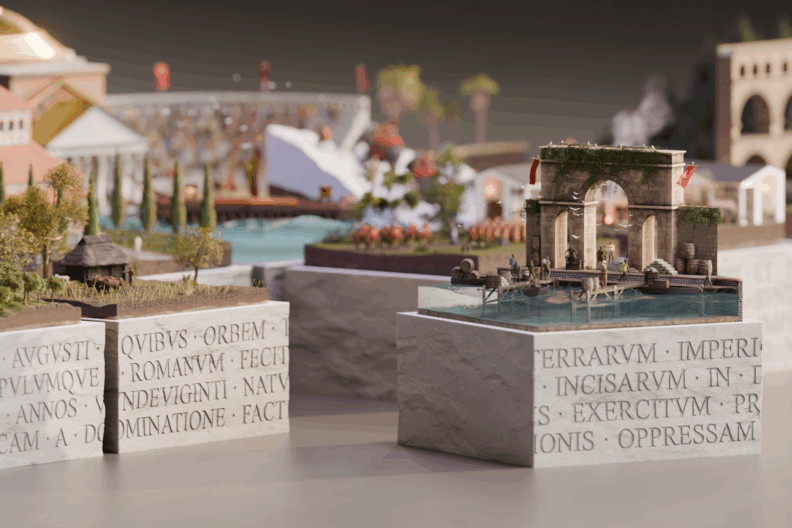
Aeneas is the first generative neural network for contextualizing Roman inscriptions. Aeneas retrieves textual and contextual epigraphic parallels, leverages visual inputs, handles arbitrary-length text restoration, and advances the state of the art in key tasks (restoring, dating and placing inscriptions). Research now continues on performance analysis and the contextualisation function.
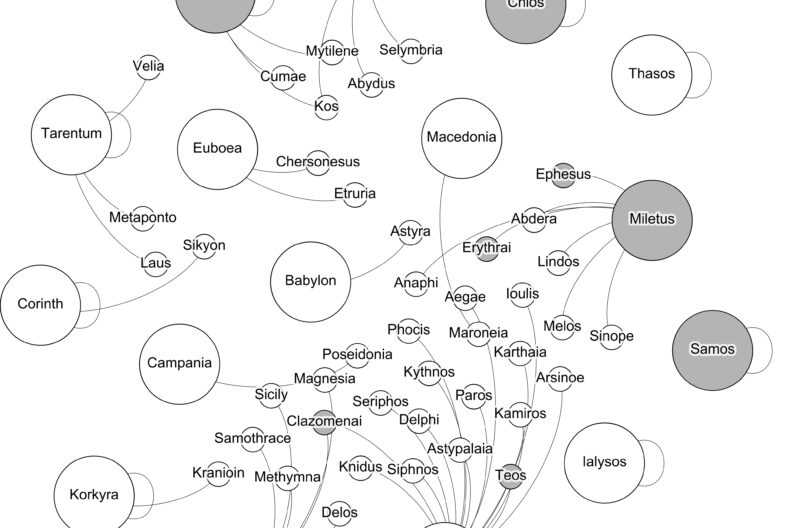
Building out of a Leverhulme Early Career Fellowship, Dr Michael Loy’s current research is currently focussed on using the material record of the fifth century BCE to model aspects of the fifth century Aegean economy. In essence this project seeks to undertaken an ‘archaeology of the Athenian empire’, and to test with quantitative data well-established narratives about Athenian imperialism in the fifth century.
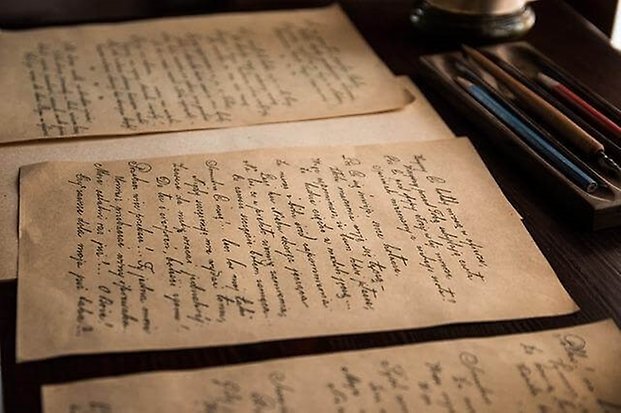
“Marginalia and Machine Learning” is a project involving scholars in Digital Humanities, Computer Science and the Libraries of Durham and Uppsala Universities to create machine learning models that will automatically identify and extract handwritten annotations from early printed books, exploiting the rich collections of both Universities for training data.

Ugarit is a web-based tool for manual translation alignment of parallel texts. The tool is now widely used for learning new languages, especially historical languages, and as a reading environment for parallel texts.
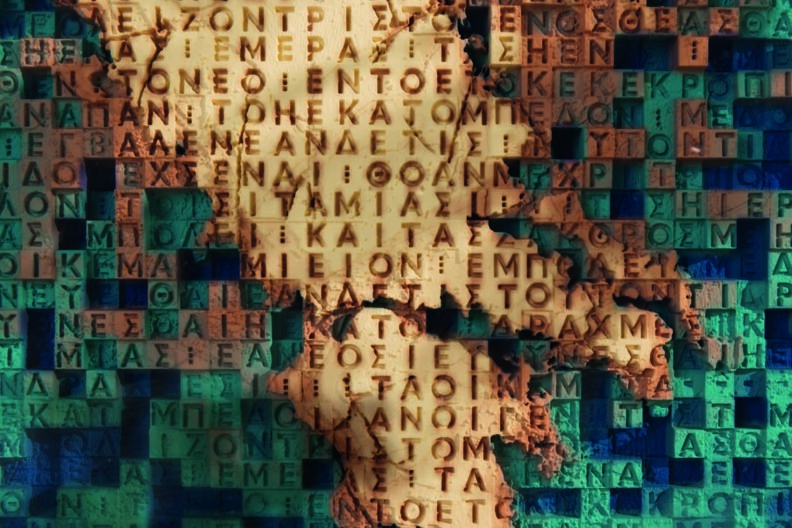
Ithaca is the first deep neural network for the textual restoration, geographical attribution and chronological attribution of ancient Greek inscriptions. The model is designed to assist and expand the historian’s workflow: its architecture focuses on collaboration, decision support and interpretability. Research now continues on investigating the new contextualisation function of the upgraded model.
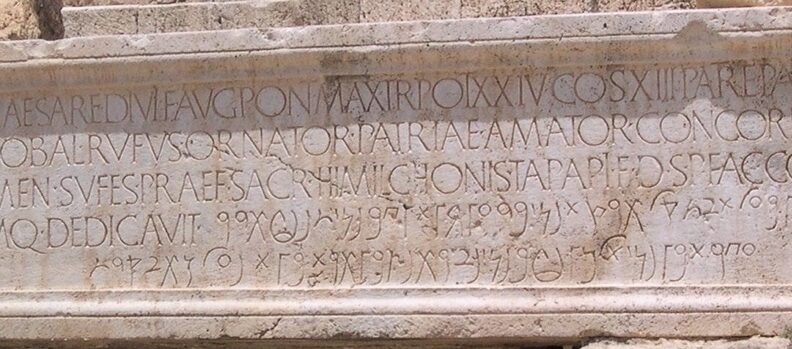
Inscriptions of Roman Tripolitania (IRT 2021) (Reynolds, Roueché, Bodard, Barron et al., 2021) is a fully updated, open-access digital edition of the inscriptions and painted texts of Roman Tripolitania. Built in EFES and encoded in EpiDoc, it brings together the classic corpus published by Joyce Reynolds and John Ward-Perkins (1952; reissued online in 2009) with all material published since then—expanded, standardised, translated, and richly referenced.
Inscriptions on stone are the most important documentary source for the history of the ancient city of Athens and its surrounding region, Attica. The Attic Inscriptions Online (AIO) website provides annotated English translations of these inscriptions, along with links to Greek texts, images, maps, and educational resources for the incorporation of inscriptions into all levels of primary and secondary school teaching.
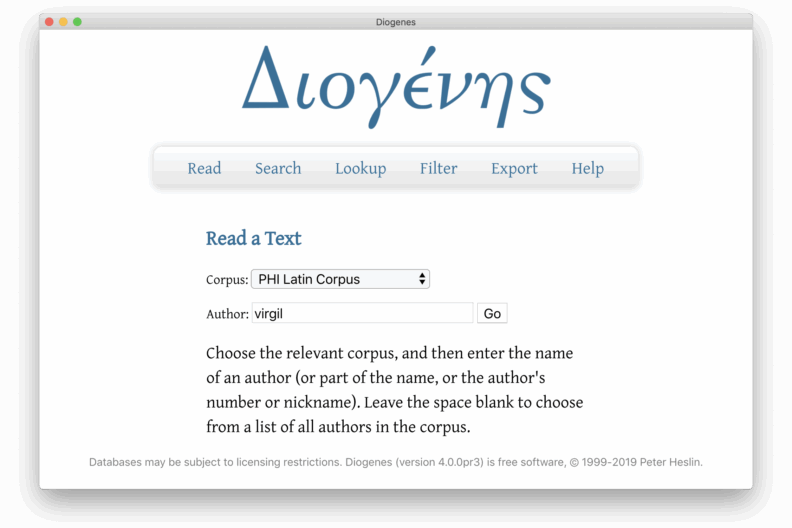
Diogenes is free software which enables anyone with an internet connection, and especially those without convenient access to a good library, to read classical Greek and Latin texts from comprehensive collections of authoritative editions. Diogenes offers free access to classical texts and to integrated morphology and dictionaries for language learners. A major rewrite of Diogenes, Version 4, was launched in September 2019, alongside a completely new webapp, DiogenesWeb, which runs on phones and tablets.